
Selling · Refinancing
Certificate of location in the Laurentians
In short
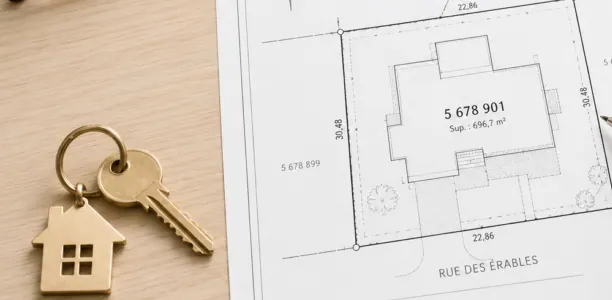
A certificate of location is a report and a plan prepared and signed by a Quebec land surveyor (arpenteur-géomètre). It describes your property as of a specific date: lot lines, where the buildings sit, servitudes, and whether everything complies with municipal by-laws. In Quebec, the notary almost always asks for one when a property is sold, and most lenders require one for a mortgage.
When do you need it?
- You're listing your house, cottage or condo for sale
- You're refinancing or switching lenders
- You've made changes since the last certificate: addition, pool, garage, shed, deck
- The zoning changed, or your lot got a new number during the cadastral reform
- You're buying and want to know what you're getting before you sign
What the mandate includes
- Search of the titles and deeds published in the land register
- Field survey of the house, outbuildings and anything along the lot lines
- Check of setbacks under the zoning by-law
- Identification of servitudes, encroachments and views onto neighbours
- Check of special zones: flood zone, agricultural zone, shoreline, heritage
- A signed report and plan, sent to you or directly to your notary
Coming from outside Quebec?
If you've bought property in Ontario or elsewhere in Canada, the certificate of location may be new to you. It's not the same as an Ontario survey: besides showing the lot and buildings, the Quebec surveyor gives an opinion on the property's situation in relation to the titles, the cadastre and the applicable by-laws. Title insurance is sometimes offered as an alternative, mostly for refinancing, but it doesn't tell you what is actually on the land.
What the surveyor checks
The certificate compares three things: what your titles say, what the Quebec cadastre shows, and what is actually on the ground. When they match and the buildings meet the by-laws, the report confirms it. When they don't, it says so plainly.
The most common findings:
- a shed or garage built too close to the rear or side line;
- a deck, fence or hedge that encroaches on the neighbour's lot;
- a window that looks onto the neighbour less than 1.5 metres from the line, what the Civil Code calls a "view";
- a right of way, power line or pipe that doesn't appear anywhere in your deed;
- part of the lot in a flood zone or in the shoreline buffer of a lake or river.
If the certificate shows a problem
Most issues can be sorted out before the closing. Depending on the case, the municipality may grant a minor variance, acquired rights may apply, a servitude can be signed with the neighbour, or a title can be corrected. Your notary decides on the next steps with you. Our job is to describe the situation clearly and explain what it means for your transaction.
That's why we recommend ordering early: a problem found two months before the closing gets fixed. Found three days before, it can delay the sale.
Timelines and cost
Timing depends mostly on the season. Spring and summer are the busiest periods because that's when most sales close. The smart move is to order the certificate as soon as you list, without waiting for an accepted offer. That's also how you avoid paying for a rush job.
The price depends on:
- the size and shape of the lot;
- the number of buildings to locate (garage, shed, pool, carport);
- how complex the titles and land register searches are;
- access to the property and vegetation;
- the turnaround you need.
You get a written price and timeline before we start. More in our guide How much does a certificate of location cost?
What makes the Laurentians different
A certificate in Blainville and one in Saint-Adolphe-d'Howard are not the same job. In the suburbs, it's mostly pools, sheds and rear additions that come up. In the Pays-d'en-Haut and around Mont-Tremblant, we more often find cottages built 40 or 50 years ago on loosely described lots, shared private roads with no written servitude, and buildings partly inside the shoreline buffer. Those files take more research, and we tell you upfront in the quote.
Useful documents to send us
- The address and, if you have it, the lot number
- Your deed of purchase
- Your previous certificate of location, if any
- Permits for any work done (addition, pool, garage)
- Your notary's name and the planned closing date
None of this is required to get a quote. The address is enough to get started.
Steps
How it works
-
Order
Send us the address, your deadline and your notary's name. We send you a written price and timeline.
-
Research
We review the titles, the cadastre, published deeds and the municipal by-laws that apply.
-
Field survey
Our crew measures the property with a total station or precision GPS. You usually don't need to be there.
-
Signed report
You receive the signed report and plan. We can send them directly to your notary and answer your questions.
Listing your home soon? Order the certificate now.
Service areas
Certificate of location from Laval to Mont-Tremblant
Our office is in Val-David. Pick your town to see what makes it different.
Detailed pages for this service
- Certificate of location in Saint-Jérôme
- Certificate of location in Mirabel
- Certificate of location in Blainville
- Certificate of location in Saint-Eustache
- Certificate of location in Saint-Sauveur
- Certificate of location in Mont-Tremblant
FAQ
Frequently asked questions: certificate of location
Can I reuse my old certificate of location?
Yes, if it still shows the property exactly as it is today and your notary and lender accept it. Any work, zoning change or new lot number means you need a new one. Send us a copy and we'll tell you whether it can still be used.
Is a certificate of location the same as an Ontario survey?
Not quite. Besides showing the lot and buildings, the certificate includes the surveyor's opinion on compliance with titles and by-laws. It's prepared under Quebec rules and only a Quebec land surveyor can sign it.
Can I use title insurance instead?
Some lenders accept title insurance, mainly for refinancing. For a sale, the standard Quebec offer to purchase generally requires the seller to provide a certificate. Check with your notary.
Can I use the certificate to put up a fence?
No. It doesn't place any markers on the ground and must not be used to build. To know exactly where your line is, you need property staking.
Who pays for the certificate in a sale?
Usually the seller, under the standard offer to purchase used by real estate brokers in Quebec. The parties can agree otherwise, so check your offer.
Do I need one to sell a condo?
In most cases, yes. A condo certificate covers the private portion and its situation in the building. See Condominium surveys.
Related services
Often requested with a certificate
Property staking
To know exactly where your line is before a fence or work.
Condominium surveys
Condo certificates and vertical cadastre plans.
Waterfront properties
Shoreline buffer and flood zones: what changes on the water.
Helpful guides
-
Guide
When do you need a certificate of location?
Selling, refinancing, an addition, a new pool: when you need a new certificate, and when the old one may still do.
-
Guide
How much does a certificate of location cost?
What drives the price of a certificate of location, and how to avoid paying for a rush job.
-
Guide
Is my certificate of location still valid?
A certificate doesn't expire on a set date. Here's how to tell whether yours still works for a sale.
No-obligation quote
Request your quote: certificate of location
Send us the property address and your deadline. We'll call to confirm the details, then send you a written price and timeline.
- 418 265-9419
- info@arpenteurlaurentides.com
- 1534, rue Vinet, Val-David, QC J0T 2N0
- Monday to Friday, 8 a.m. to 5 p.m.